strategy workshop agenda: a step by step guide
You've booked the room. You've made the slides. You walk your team through your big plan for next year, pause and ask "Any thoughts?"
Silence. A bit of nodding. Someone checks their phone.
Then, three weeks later, the real objections start trickling into the group chat.
Your team almost always has opinions about strategy. They just need a better way to share them.
“To run a strategy workshop everyone contributes to: ask one clear question, give people time to think before they talk, hear from every person in turn and end with actions that have owners.”
In this guide, I'll walk you through exactly how to do that, step by step. I'll also show you why LEGO® SERIOUS PLAY® was built for this very problem.
Want a strategy workshop where every voice gets heard? I run LEGO® SERIOUS PLAY® strategy workshops for small teams.
What is a strategy workshop?
A strategy workshop is a focused session where a team agrees where the business is going, what matters most and what happens next.
It's not a meeting where the founder presents a plan and everyone claps. A good strategy workshop is a two-way conversation. You're drawing on what your team sees every day: the client niggles, the clunky processes and the opportunities you're too close to spot.
In my 19 years of corporate project management, including global program management in pharma, I sat in a lot of strategy sessions. The ones that worked had one thing in common. The people closest to the work had a real say in the plan.
Why don't people speak up in strategy workshops?
People stay quiet because of hierarchy, fear of looking silly, thinking speed and groupthink. None of it means they've got nothing to say.
Here are the usual culprits:
- The founder is in the room. If you share your view first, most people will politely agree with it. There's even a name for this: the HiPPO effect (the Highest Paid Person's Opinion wins).
- Fast talkers set the pace. Some people think out loud. Others need a minute. Guess who gets heard?
- Fear of looking silly. Nobody wants to suggest the idea that gets an awkward silence.
- Groupthink. Once two or three people agree, it takes real courage to disagree.
The result? You get the opinions of your most confident people, not your best thinking.
How do you run a strategy workshop step by step?
Plan around one clear question, invite the right people, design time for everyone to contribute, then turn the output into a plan with owners.
Before the workshop
1. Choose one big question. "Where do we want to be in 12 months, and what's in the way?" works far better than "Let's talk about strategy."
2. Invite the right people. Include the people who'll make the plan happen, not only senior staff.
3. Share the question in advance. Your thinkers will thank you.
4. Decide who's running the session. If it's you, you can't fully take part. More on that below.
During the workshop
Here's a simple half-day agenda you can borrow:
0:00 to 0:20, Welcome and warm-up - get everyone participating early
0:20 to 1:00, Where are we now? - honest view of the current reality
1:00 to 1:45, Where do we want to be? - shared picture of the future
1:45 to 2:00, Tea/Coffee Break
2:00 to 2:45, What's in the way? - spot the risks and blockers
2:45 to 3:30, Priorities and actions - agree the top three things and who owns them
3:30 to 4:00, Wrap-up - check everyone's clear on next steps
After the workshop
1. Write it up within 48 hours, while it's fresh.
2. Turn priorities into projects with owners and deadlines.
3. Book a review for 30 days later, before everyone leaves the room.
How do you get everyone to contribute in a strategy workshop?
Give people silent thinking time, hear from everyone in turn, let the founder speak last and use visual tools so ideas don't rely on talking alone.
These are the techniques I come back to again and again:
- Think first, talk second. Give everyone a few minutes to jot down their own answer before any discussion. This stops the first idea in the room from steering the rest.
- Go round the table. Everyone shares in turn. No skipping, no "I agree with Sarah." (I'm flattered, but no.)
- Founder speaks last. Your view still counts. It just shouldn't set the tone.
- Use anonymous input for touchy topics. Sticky notes or an online form help people say the thing they wouldn't say out loud. I love using Mentimeter to get anonymous feedback from the room.
- Make ideas visible. When ideas are on a wall, a whiteboard or a table, people talk about the idea rather than the person.
That last one is where LEGO® SERIOUS PLAY® really comes into its own.
“It’s such a different approach to a workshop. Everyone gets to talk and share their point of view. Everyone else listens. Everyone was equal and no answers were right or wrong.”
How does LEGO Serious Play work for strategy workshops?
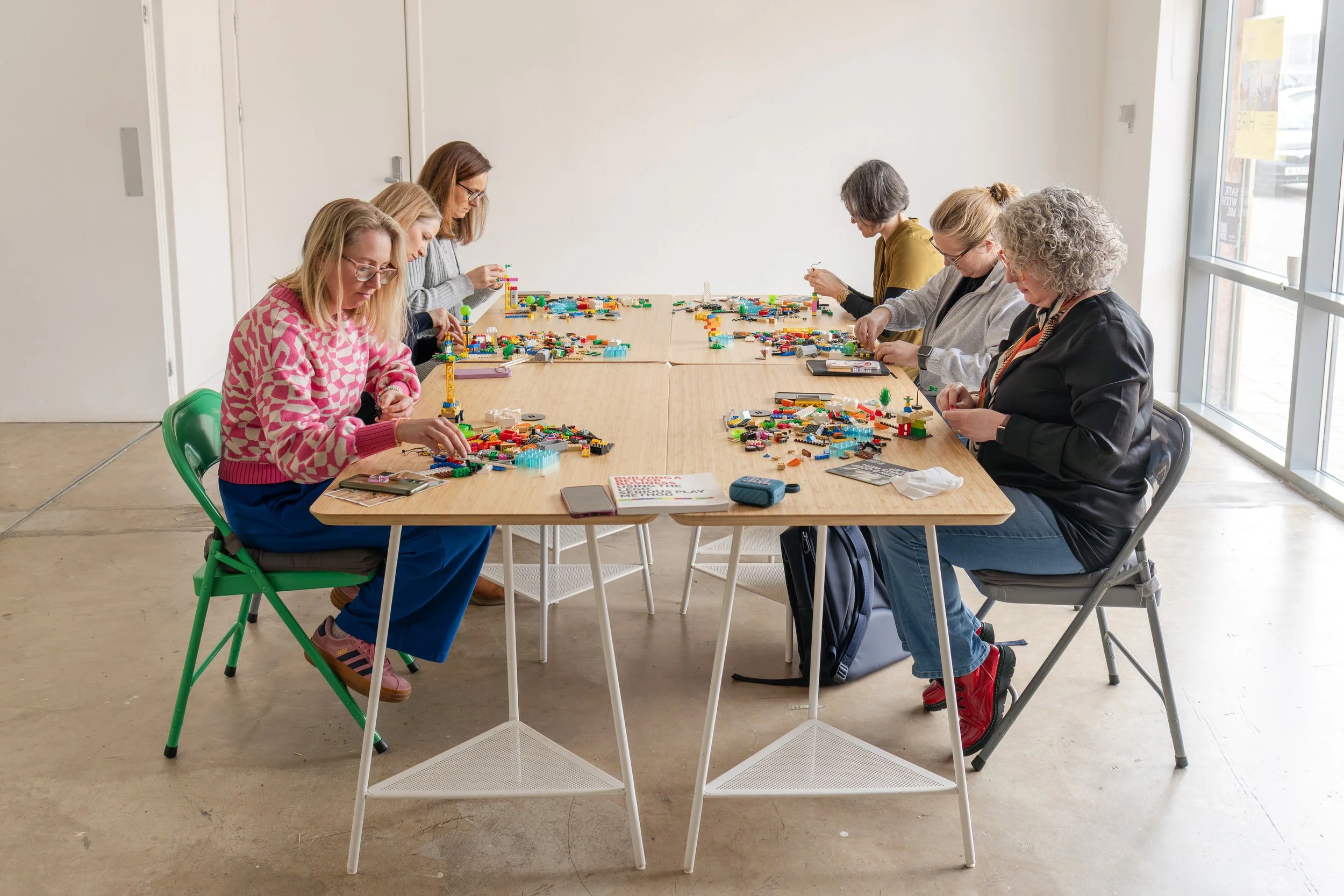
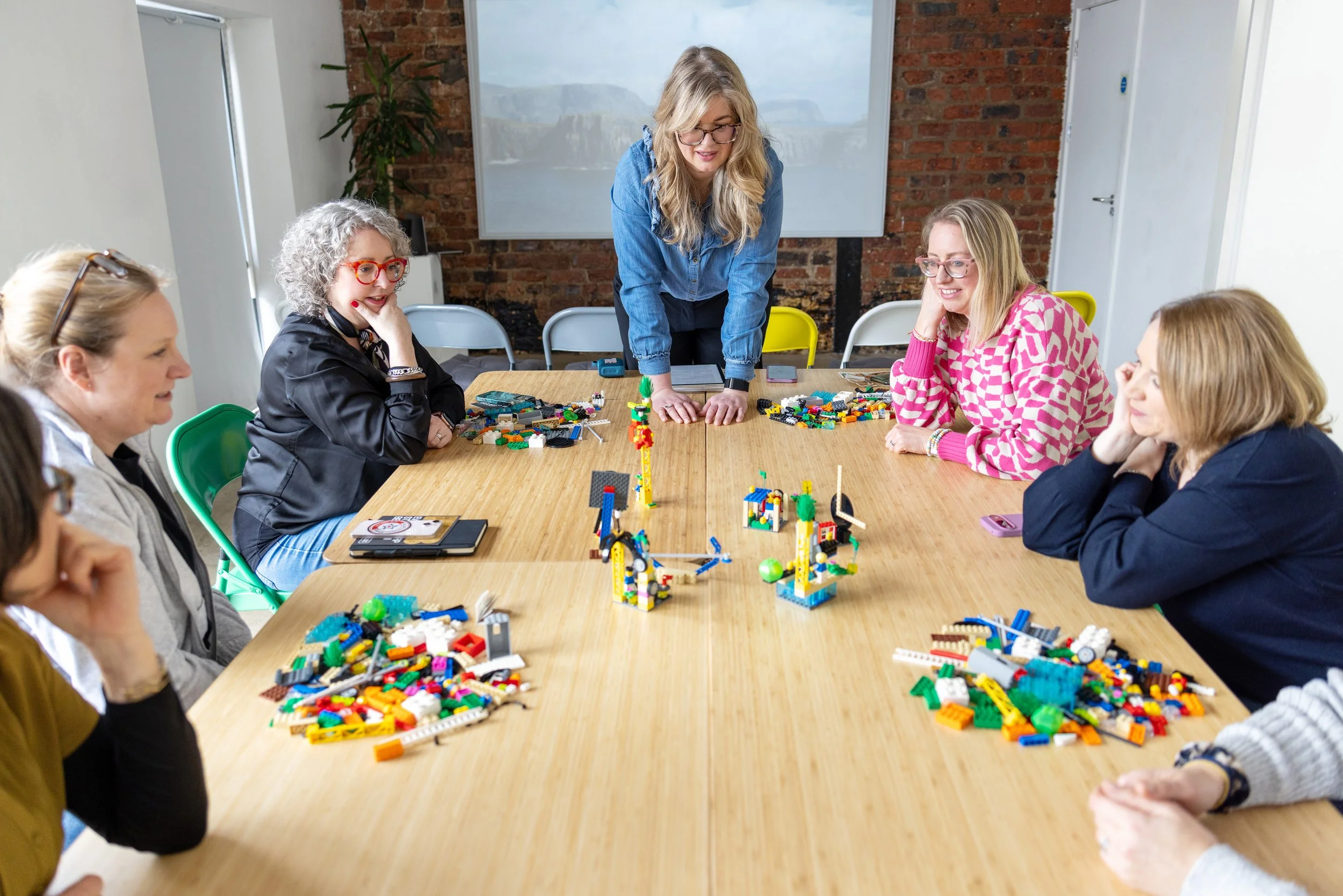
LEGO Serious Play asks each person to build a model answering a strategy question, then share its story, so every view is seen and heard.
Here's a fun fact. LEGO Serious Play was first developed at the LEGO Group in the late 1990s to help leaders think differently about strategy. So using it for a strategy workshop isn't a gimmick. It's what it was made for.
A strategy session usually follows this flow:
1. Skills Building Quick, playful builds so everyone gets comfortable with the bricks.
2. Individual models. Each person builds their answer to a question like "What does our business look like when it's working brilliantly?"
3. Sharing & Reflection. Everyone explains their model. The team asks questions about the model, not the person.
4. Shared model. The team combines the best ideas into one model you all agree on.
5. Testing. We throw "what if" scenarios at the model. What if we lose a big client? What if we hire two people? You see what holds up.
6. Guiding principles and actions. We capture what you've agreed and turn it into next steps.
Why does it work so well? Because building gives people time to think before they speak. Everyone contributes, by design. And it's much easier to say "this bit of the model feels shaky" than "I don't think your plan will work."
You also end up with something you can see. A strategy you've built together, brick by brick, sticks in people's heads in a way a slidedeck never will.
“The concept was very interesting and leveled the playing field so that everyone found their voice, contributed and engaged. Sarah ran a seamless event, her warm style put everyone at ease. Every team would benefit from this experience.”
Should a founder run their own strategy workshop?
You can, but it's hard to lead and take part at once. An outside facilitator lets you join in fully while someone else protects the process.
When you run your own strategy workshop, you're juggling the agenda, the clock, the snacks and your own opinions. Your team also knows you're the boss, so they'll watch your face for clues.
Bringing in someone neutral means:
- You get to think, not manage the room
- Your team feels safer saying what they really think
- Someone keeps the session on track when it wanders (and it will)
If you do run it yourself, stick to the techniques above and be strict with yourself about speaking last.
What happens after a strategy workshop?
Turn your priorities into projects with owners, deadlines and a regular review rhythm, or the plan fades within weeks.
This is where most strategy workshops go to die. Everyone leaves buzzing, then life takes over.
As a project manager, this is the bit I care about most. Strategy only matters if it turns into action. So:
- Pick your top three priorities. Not ten.
- Break each into projects with one named owner.
- Put them somewhere visible. A project management tool like Asana works well.
- Review monthly. Ten minutes in your team meeting is enough to keep it active and up-to-date.
If you'd like support turning strategy into a plan your team can run with, my project management consultancy is here to help.
Is a strategy workshop the same as a team away day?
Not quite. An away day is often about connection, while a strategy workshop focuses on decisions. The best sessions blend both.
You can absolutely run a strategy workshop as part of an away day. Morning for strategy, afternoon for something social.
Ready to run a strategy workshop everyone contributes to?
Your team has the ideas. They just need the right space to share them.
If you'd like a strategy workshop where every person has a voice, and you walk away with a clear plan, I'd love to help.
Enquire about a LEGO® SERIOUS PLAY® strategy workshop
Let's talk about what you'd like your team to figure out together.